











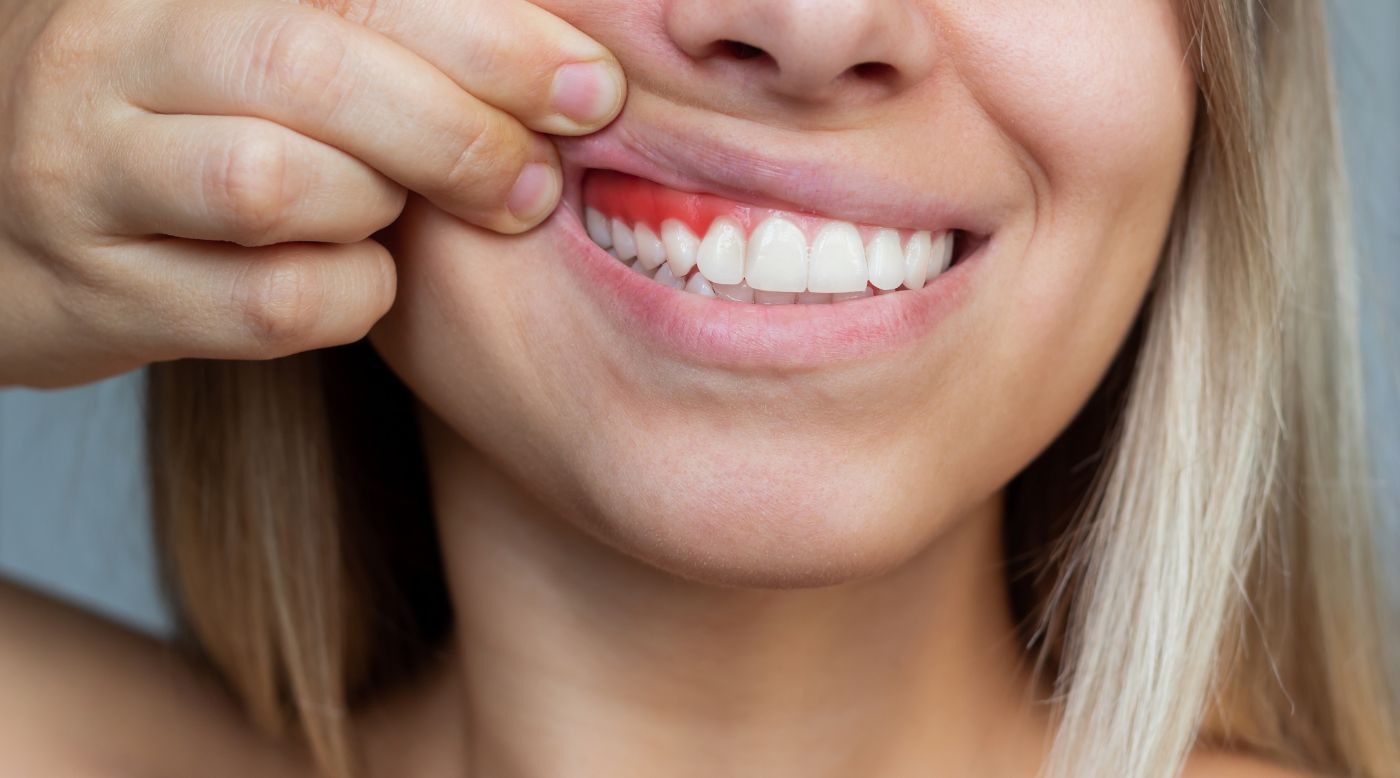
Warning sign or harmless? Bleeding gums often happen unexpectedly in a perfectly normal moment. You brush your teeth, rinse, and suddenly you see red in the sink. And immediately the question arises that so many people Google: What to do about bleeding gums? The underlying feeling is usually a mixture of uncertainty and the desire not to overlook anything.
The good news is that in many cases, bleeding gums can be easily managed if you identify the cause and give your gums a few days of real rest and support. At the same time, it's important to know that bleeding isn't simply "normal." Healthy gums don't bleed. If they do bleed, it's almost always a sign that the tissue is irritated or that inflammation is developing at the gum line.
This article explains why gums bleed , what you can do immediately , the most common causes , and when it's best to see a dentist . We'll also look at which home remedies can be helpful, which might be risky, and how to establish a gentle routine that will strengthen your gums in the long run.
Gums are richly supplied with blood vessels. As soon as they are irritated or inflamed, these tiny vessels become more sensitive. Even a light touch while brushing can then be enough to cause irritation. Many people try to be extra thorough and scrub harder in this situation. But! This can actually worsen the problem. More pressure is rarely the solution. Your gums usually don't need more force, but rather gentle, consistent care that reduces plaque without causing further irritation.
What to do about bleeding gums: Immediate help that really makes sense
If you're experiencing acute gum bleeding, you primarily want two things: for it to stop quickly and to be sure you're not doing anything wrong. It's important to understand that immediate relief doesn't mean ignoring the cause. It simply means giving your gums the best possible conditions right now so they can calm down.
The first step is surprisingly simple: stay calm and don't scrub. When blood is visible, the tendency is to scrub the area even more until it's "clean." This can further irritate the small blood vessels and even increase the bleeding. Now, gentle control without pressure is key.
If you notice blood immediately after brushing, rinse your mouth briefly with lukewarm water. Hot water can cause further irritation, and very cold water can be uncomfortable. Afterwards, leave your gums alone for a moment. Sometimes this short break is enough for the situation to visibly improve.
If your gums are bleeding significantly, you can apply gentle pressure for a short time. Take a sterile compress, carefully place it on the bleeding area, and hold it in place for a few minutes without rubbing. The goal is to soothe the tissue, not to massage it.
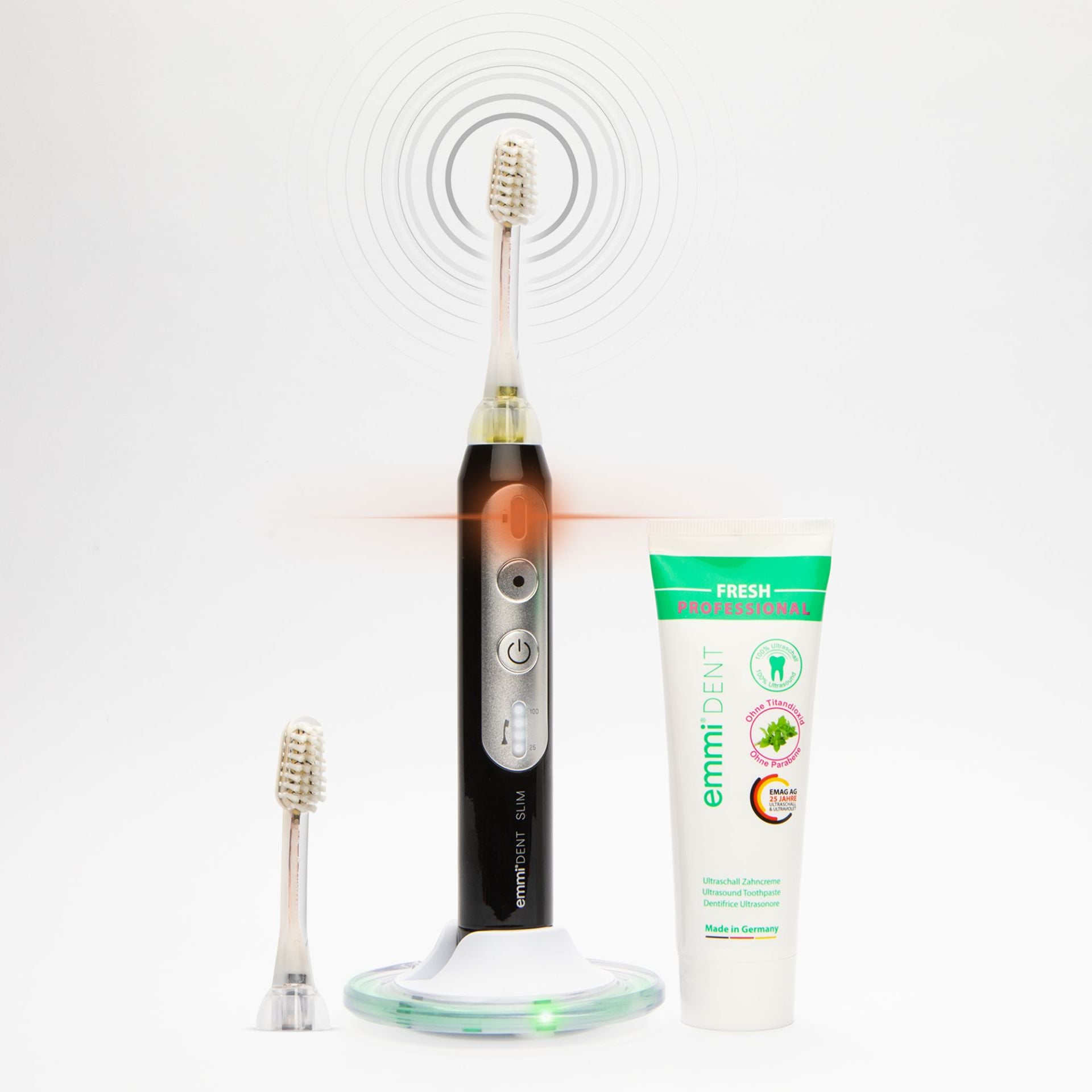
Your brushing routine is crucial for the next few days. Don't brush less, but more gently. Harmful plaque shouldn't remain on your teeth because it promotes inflammation, but you should also avoid mechanically stressing the tissue. This is precisely where a cleaning method that doesn't rely on scrubbing is beneficial. With our emmi-dent Slim , you can work very gently because the cleaning is supported by ultrasound, meaning you don't have to apply pressure along the gum line. Combined with our emmi-dent Ultrasonic toothpaste, specially formulated for ultrasonic cleaning, this creates a particularly gentle routine that doesn't further irritate your gums. It's important to consciously brush slowly from tooth to tooth and take your time.
A few things are particularly helpful during this phase, without requiring you to completely change your daily routine:
- Continue cleaning regularly , but with little pressure and without hectic movements.
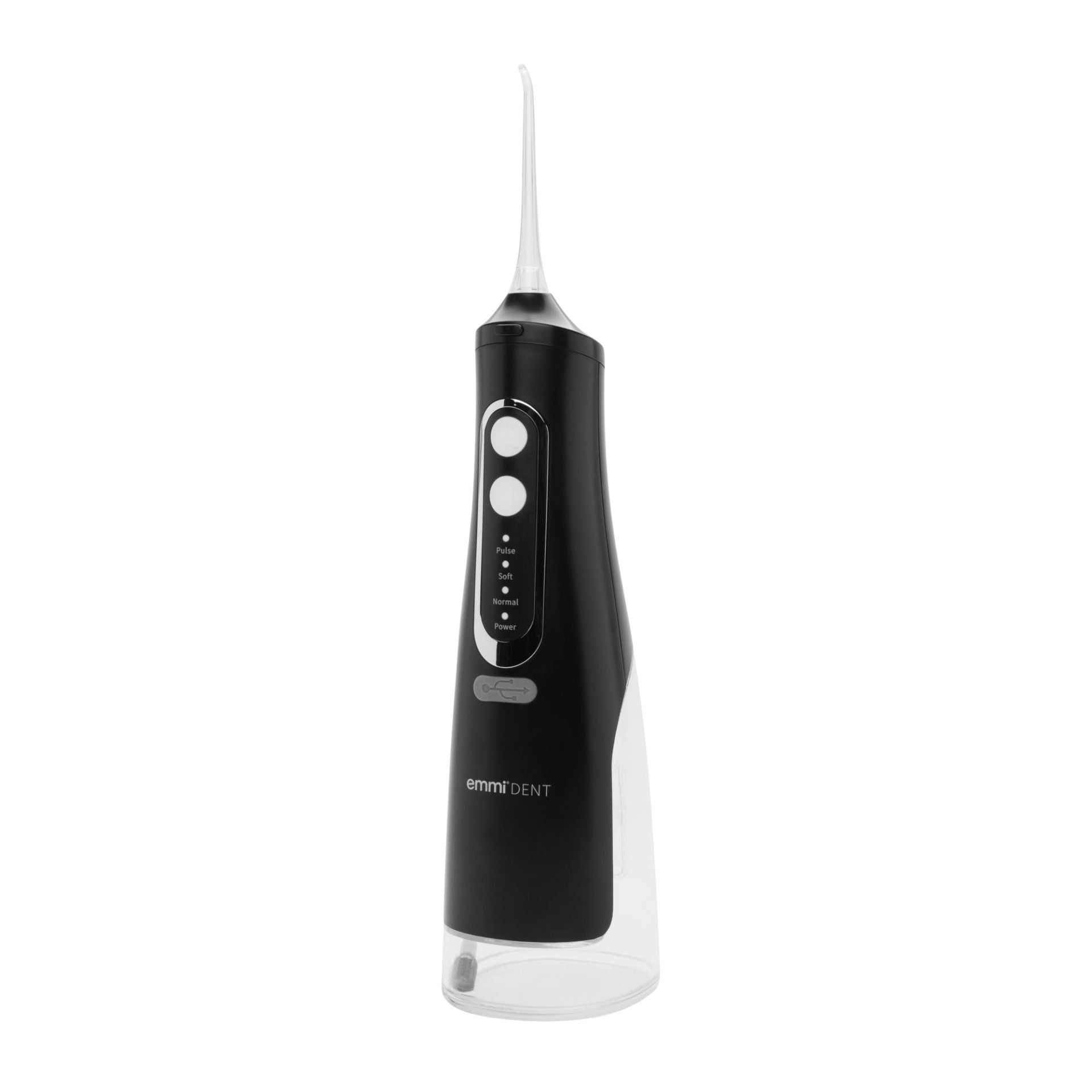
- Clean the spaces between your teeth gently , because that's where inflammation often starts.
-
Drink enough water so that your mouth doesn't dry out and your saliva can fulfill its protective function.
If you're wondering "Bleeding gums: What really helps?", the answer is usually not a single factor, but rather a combination of gentle cleaning, consistent plaque control, and a little patience. Many people notice after just a few days that their gums are less sensitive when they aren't constantly being mechanically irritated.
Important notice! When immediate aid is not enough
Immediate help is good, but there are situations where you shouldn't wait. If the bleeding is very heavy, if it occurs without any apparent reason, or if it keeps recurring over many days, this is a clear sign that you should have the cause investigated. If gum bleeding doesn't stop, it's not something to try and treat yourself. You don't need to be afraid, but you should seek professional advice from your dentist.
Common causes of bleeding gums that you should know
If you repeatedly find yourself wondering what to do about bleeding gums , the most important step is to identify the most likely cause. This isn't meant to alarm you, but rather to enable you to take targeted action. Bleeding gums are almost never random. They usually indicate that something is out of balance at the gum line. And the sooner you restore this balance, the faster the tissue will calm down.
Bleeding gums due to plaque and inflammation at the gum line?
The most common cause is the onset of gingivitis. Plaque accumulates particularly easily at the gum line because this is where the transition between tooth and tissue occurs. Plaque is not a sign of poor hygiene, but rather a normal biofilm that forms daily. It becomes problematic when it remains on your teeth or between your teeth for too long, or when it becomes trapped in areas that you can't fully reach when brushing. Then the bacteria don't just react passively; they alter the environment at the gum line. The tissue becomes more sensitive, swells easily, and bleeds more readily.
Typically, bleeding occurs primarily during brushing. Sometimes it's just a small spot, sometimes it affects several areas. If gums bleed regularly while brushing, it's very often due to inflammation caused by plaque. The good news is that this type of bleeding can usually be soothed with consistent yet gentle brushing. However, we always recommend having your dentist check out any gum bleeding that persists over a longer period.
Bleeding gums due to too much pressure while brushing?
Many people overdo it. The impulse is understandable. If something bleeds, you want to clean it. But gums are sensitive. Too much pressure, a hard brush, or fast, scrubbing movements can cause tiny injuries that then bleed. Additionally, over time, the gums can even recede because the tissue is constantly subjected to mechanical stress.
A little self-monitoring can be helpful here. Do your gums feel tight or sore after brushing? Do you sometimes feel like you have to use a lot of force? Then it's worth consciously changing your technique. Dental care should be thorough, but not aggressive. Your mouth doesn't need a fight, but rather a routine that protects it.
That's precisely why an ultrasonic cleaning routine can be beneficial at this stage. With our emmi-dent Slim Nature Set, you don't scrub, but rather benefit from gentle ultrasound support. This can help reduce the irritation caused by pressure without compromising on cleanliness. Combined with our emmi-dent ultrasonic toothpaste , the cleaning process becomes especially gentle because you don't rely on mechanical abrasion.
Bleeding gums because the spaces between your teeth aren't being cleaned properly?
A classic problem that's easily overlooked in everyday life is the spaces between teeth. Many people brush their teeth very thoroughly, but some food still gets trapped between them. This is precisely where inflammation often develops, later manifesting as bleeding. The insidious thing is: you usually don't see it at first. You only notice it when your gums bleed while brushing or flossing.
If you notice blood while cleaning between your teeth, it doesn't automatically mean you should stop. Often, it's a sign that there's already irritation. The important thing is to work very gently and persevere. With regular cleaning, the gums often calm down again. It just takes a little time for the tissue to get used to the new routine and for the inflammation to subside.
Note: If you are unsure, you should seek professional advice from your dentist.
Bleeding gums due to stress, smoking, and a dry mouth?
Oral health is closely linked to saliva flow. Saliva is a natural protector. It rinses, neutralizes acids, and helps prevent bacteria from multiplying excessively. If you're under a lot of stress, don't drink enough fluids, breathe through your mouth, or take certain medications, your mouth can become drier. This makes the mucous membranes more sensitive and the gums more prone to irritation.
Smoking also plays a role here. It impairs blood circulation and slows down regeneration. Some smokers even notice inflammation later because bleeding isn't always so noticeable, even though something is happening underneath. A dry mouth and poor circulation make it harder for the gums to recover. This isn't a reason to feel guilty, but it is a reason to give your mouth more support.
Bleeding gums caused by poor diet and possible deficiencies?
Diet can also play a role. A diet very high in sugar promotes an environment in which certain bacteria thrive. At the same time, deficiencies can make tissue more susceptible. Vitamin C is a well-known example here, as it is important for connective tissue and mucous membranes. If your gums generally seem sensitive, it might be worth taking a look at these basics. Simply as targeted improvements in your daily routine.
Gums thrive on regularity and good care. Sometimes it's not one single trigger, but rather the accumulation of small things that creep in over weeks.
Bleeding gums during pregnancy and due to hormonal changes?
A special case that frequently appears in search queries is "bleeding gums during pregnancy, what to do?". During hormonal phases, the gums can have increased blood flow and react more quickly to plaque. This doesn't automatically mean you have a major problem, but it does mean you should be particularly gentle and consistent with your oral hygiene. If you are pregnant and notice bleeding gums, a dental check-up is advisable so that any inflammation can be detected early. However, gentle, consistent oral care at home remains essential.