









Teeth grinding is an issue that many people underestimate for a long time. It often happens at night, completely unconsciously, while your body should actually be resting. Only over time do the first signs appear: a tense jaw in the morning, sensitive teeth, or a feeling of pressure that is difficult to pinpoint. At that point, a term often comes up that is new to many: a bite splint.
In this article, we explain how a bite splint can affect teeth grinding, what role it truly plays, and what you should pay particular attention to if braces are also involved. We also show you why your daily dental care plays an even more important role in this situation and how you can establish an effective routine.
Because here too, there is rarely one single solution. It is the interplay of protection and care that makes the difference in the long term.
What happens during teeth grinding and why it's a problem
Teeth grinding, also known as bruxism, is not a conscious action. It is a reaction of your body, often triggered by stress, inner tension, or unconscious muscular processes. While you sleep or concentrate intensely, your body builds up tension that is released through your jaw muscles.
The problem isn't the movement itself, but the force it generates. Your teeth are strong, but they are not designed to constantly work against each other. Over a long period, this stress can lead to wear and tear on the tooth surfaces, the development of fine cracks, or increased sensitivity of the tooth enamel.
At the same time, teeth grinding doesn't just affect the teeth. Your entire jaw area is also involved. The muscles are tense, the temporomandibular joint is stressed, and often these tensions even radiate into the neck or head. Many sufferers report morning headaches or a diffuse feeling of pressure without immediately recognizing the connection.
Precisely because grinding happens unconsciously, it often remains undetected for a long time.
It becomes particularly interesting when braces are also worn. Here, the entire static balance in the mouth changes. Teeth move, pressure conditions shift, and the load is distributed differently. In this phase, teeth grinding can play an even greater role because your jaw is already in an adjustment phase.
This is precisely where the bite splint often comes into play. It is not used to completely stop the grinding but to control its effects and protect your teeth.
How a bite splint works for teeth grinding
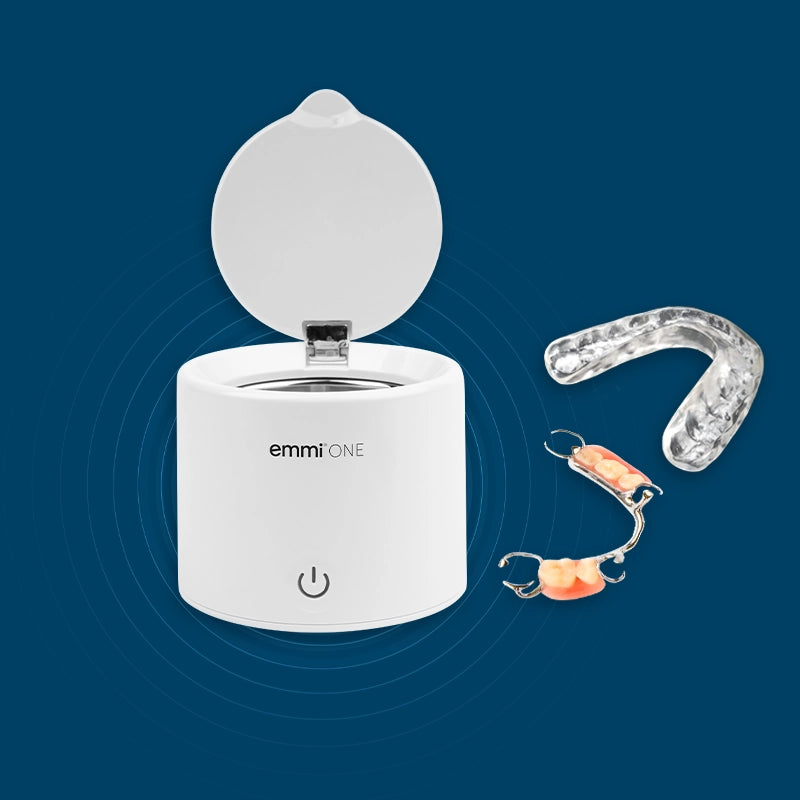
A bite splint for teeth grinding works very simply in principle, but that is precisely its strength. It is usually worn at night and acts as a protective layer between your rows of teeth, preventing your teeth from meeting directly.
This does not mean that the grinding automatically disappears. The movement can still occur. The crucial difference lies in the load. Instead of tooth on tooth, the splint acts as a buffer. It absorbs some of the forces and distributes them more evenly. The bite splint protects your teeth from further wear, but it does not eliminate the cause of the grinding.
This point is important for a realistic assessment of the issue. Many expect a quick solution, but in practice, it's more about limiting damage and relieving the jaw. At the same time, the splint can help calm the muscles somewhat because the direct contact of the teeth is reduced.
Especially with braces, this interaction becomes particularly relevant. Here, it must be precisely coordinated whether and how a bite splint is used, as the tooth position is actively changing. Incorrect or ill-fitting application can lead to shifts in pressure conditions.
Therefore, an individual assessment is always important here.
Another often underestimated point is the so-called acclimatization phase. Many people report that the splint feels strange at first. This is completely normal. Your body first needs to get used to the new situation in your mouth. Over time, however, it becomes a permanent part of the night for many.
Bite splint and braces – what you absolutely must consider
If you wear braces and also struggle with teeth grinding, a special situation arises that requires more attention than a classic treatment. While a bite splint is primarily intended to protect, braces pursue an active goal. They move your teeth, change your bite, and gradually bring your jaw into a new position.
This is precisely where the challenge lies. Both measures intervene in the same area, but with different objectives. A bite splint is designed to be static; it should stabilize the current condition and reduce stress. Braces, on the other hand, are dynamic. They continuously change the position of your teeth.
In practice, this means that a bite splint with existing braces must always be individually adjusted. There is no standard solution here. If the splint is not precisely aligned with your current dental situation, it can exert pressure on areas that are supposed to be changing. This can affect the progress of your treatment or at least slow it down. Therefore, it is particularly important that the bite splint and braces are coordinated and not used independently of each other.
Another aspect is everyday perception. Many report that the oral cavity with both elements simultaneously feels unusual at first. The combination of brackets or aligners and an additional bite splint can alter the sensation in the mouth, slightly affect speech, or create a feeling of tension.
Especially during this time, it is worthwhile to be particularly mindful of your oral cavity and listen to your body's signals. Changes in bite sensation or pressure sensitivity should be taken seriously and, if necessary, professionally clarified.
Getting used to the bite splint – what's normal and what's not
The so-called bite splint acclimatization is a topic that many find unsettling. Perhaps you've heard that the splint can feel unusual or that your bite feels different in the morning. These experiences are in many cases completely normal and part of the adjustment process.
When you wear a bite splint for the first time, your body needs to get used to a new situation. Your teeth suddenly no longer have direct contact, the muscles work differently, and your brain initially processes this change consciously.
Typical sensations in the initial phase can include the splint feeling bothersome, increased saliva production, or your jaw needing a brief "sort out" in the morning before everything feels normal again. These reactions are in most cases temporary and no cause for concern.
However, it is important to pay close attention if something changes permanently. A frequently raised issue is the feeling that the teeth don't fit together properly in the morning. This sensation can occur briefly because the muscles have relaxed overnight and the jaw is realigning itself.
However, if this feeling persists or intensifies, it should definitely be checked. In such cases, the splint may not fit optimally or may need to be adjusted.
Terms like "bite splint dangerous" or "bite splint toxic" also come up repeatedly. Here, it is important to remain objective. High-quality, individually fitted splints are generally made of tested materials and are considered well-tolerated. However, quality and professional fitting are always crucial.
Dental care with teeth grinding and braces – why it becomes even more important now
When multiple factors converge—teeth grinding, a bite splint, and possibly braces—your entire oral cavity changes. Your teeth are under greater stress, your muscles work more intensely, and at the same time, more areas are created where plaque can accumulate.
Especially with braces, cleaning automatically becomes more demanding. Brackets, wires, or aligners create additional surfaces that need to be cleaned. When teeth grinding is added, the teeth not only become harder to access but also more sensitive.
In precisely this situation, the type of your dental care becomes crucial. It's no longer just about thorough cleaning, but also about stressing your teeth as little as possible during the process.
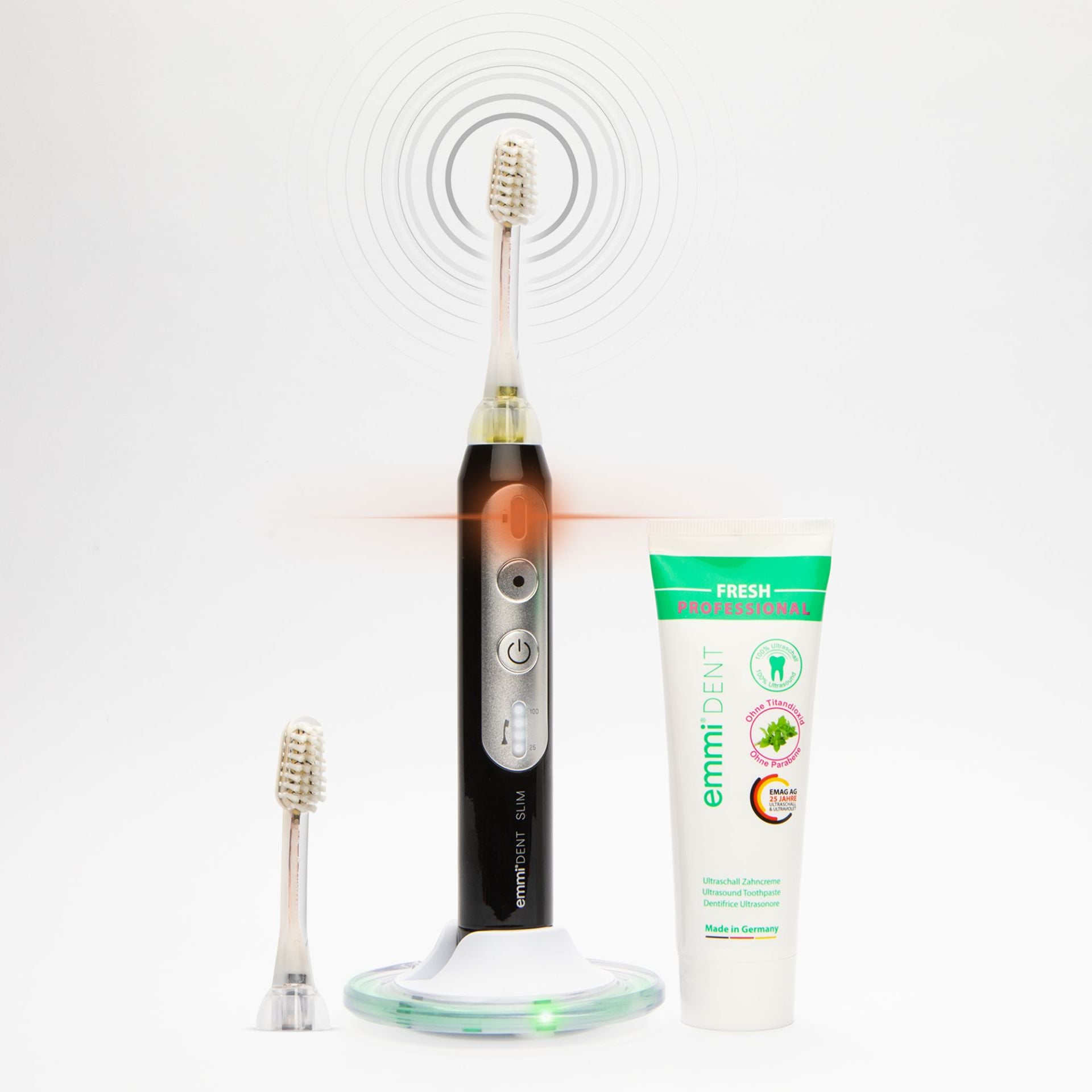
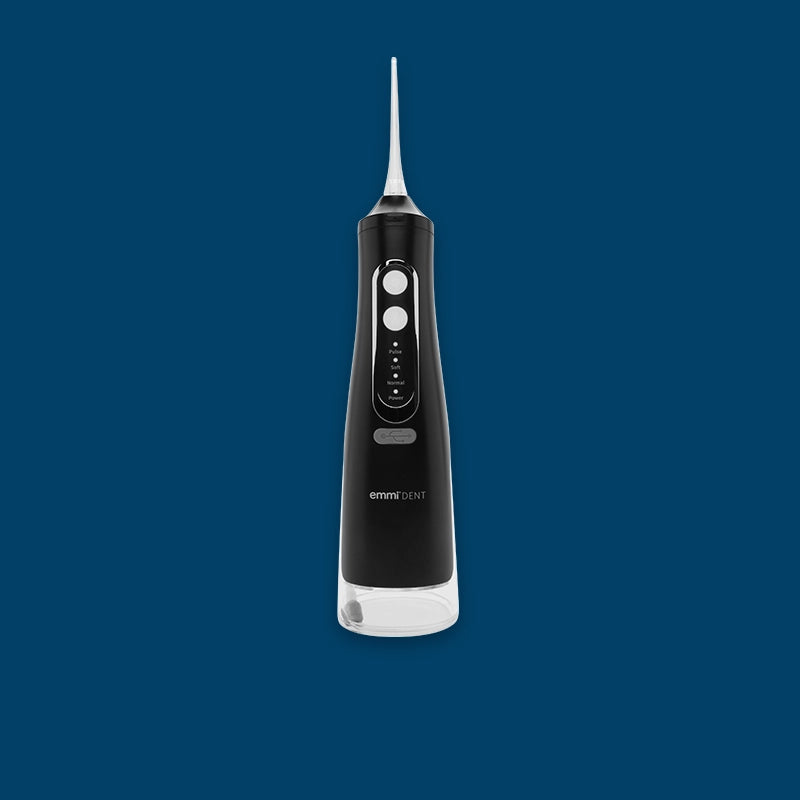
Our emmi-dent Slim ultrasonic toothbrush can provide valuable support here. It works without classic mechanical movements and reduces bacteria through ultrasound. This means you can clean your teeth without applying additional pressure, which can be a great advantage, especially for sensitive tooth surfaces.
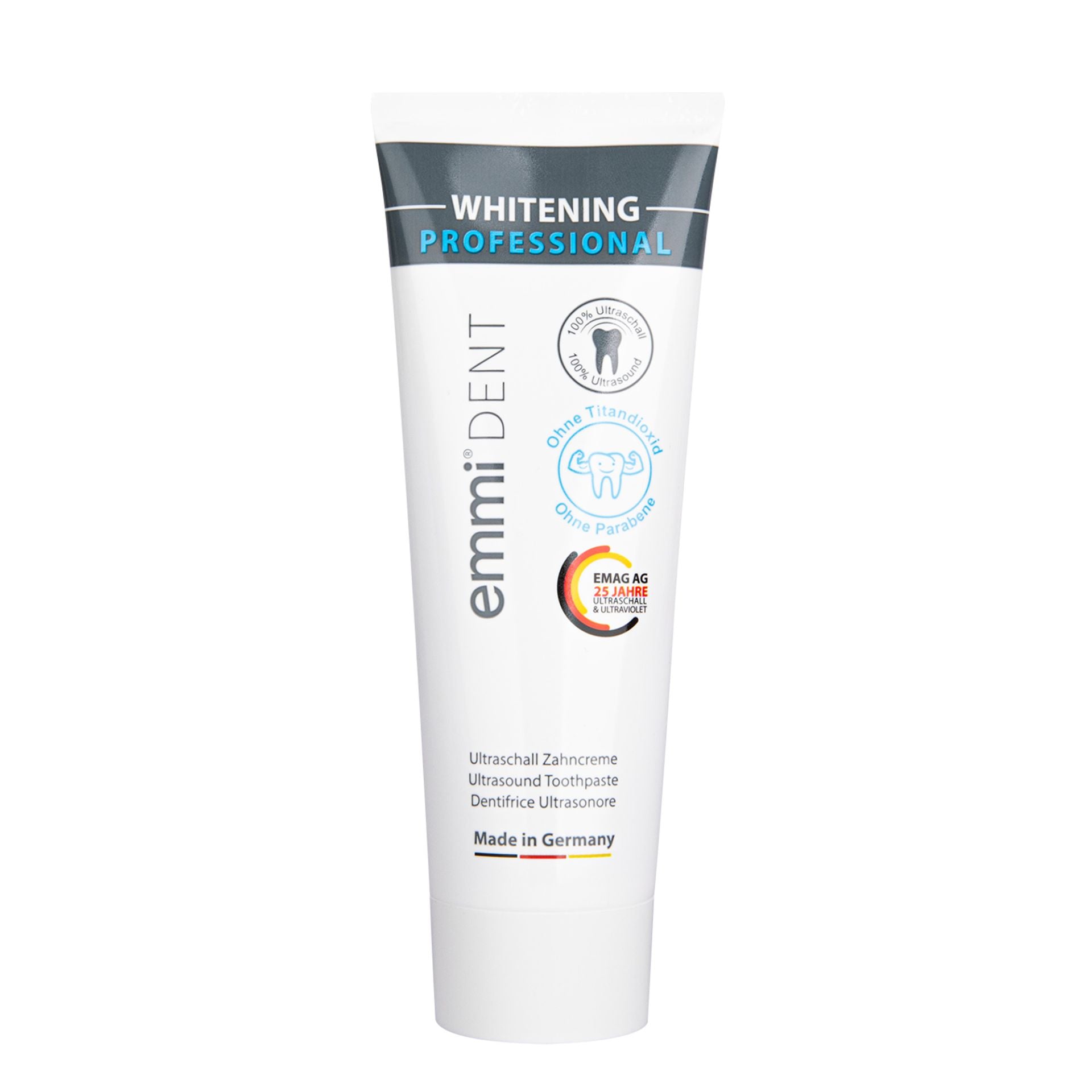
In combination with well-thought-out care concepts such as our emmi-dent Slim white teeth set or our emmi-dent Platinum Nature Set, a routine is created that doesn't just focus on individual steps but considers your entire oral cavity. Especially during phases when your jaw is already under tension, gentle but thorough care is crucial.